
Tag Archives: Economic Research Forum

Presentation of the EuroMed Report on: “Repatriation of Refugees from Arab Conflicts” (Nov 21st, Cairo)

FEMISE and ERF have the pleasure to announce that the FEMISE-ERF report will be presented in a special session that will be organised by ERF during its 2-days workshop (20-21 November in Cairo, Egypt). The special session (on the 21 of November) will host authors of the report, allow them to present the main message of their chapters and open a debate with institutional representatives and policy stakeholders on tangible solutions.


Download the report here (EN, PDF, 4.6 MB).


Context:

The prospects for early re­patriation of refugees who have fled conflicts in Arab countries in recent years do not yet look promising. Nevertheless, not only have discussions about repatriation started at both national and in­ternational levels, but there is also a steady, though still limited, stream of refugees in neighbouring countries trickling back to their war-ravaged homes. With the doors of naturalization and resettlement all but closed and the socio-economic situation in host countries weakening, the refugees have found themselves caught in very difficult circum­stances.

While mass repatriation at this stage remains premature for all war-torn countries, the current situation dictates that we recognize and unpack the issue of repatriation in all its dimen­sions, so that if and when the time comes, informed actions can be taken. This would help to support the most positive outcomes – pri­marily for the refugees, but also for other stakeholders, such as host communities and those left behind in the conflict countries.

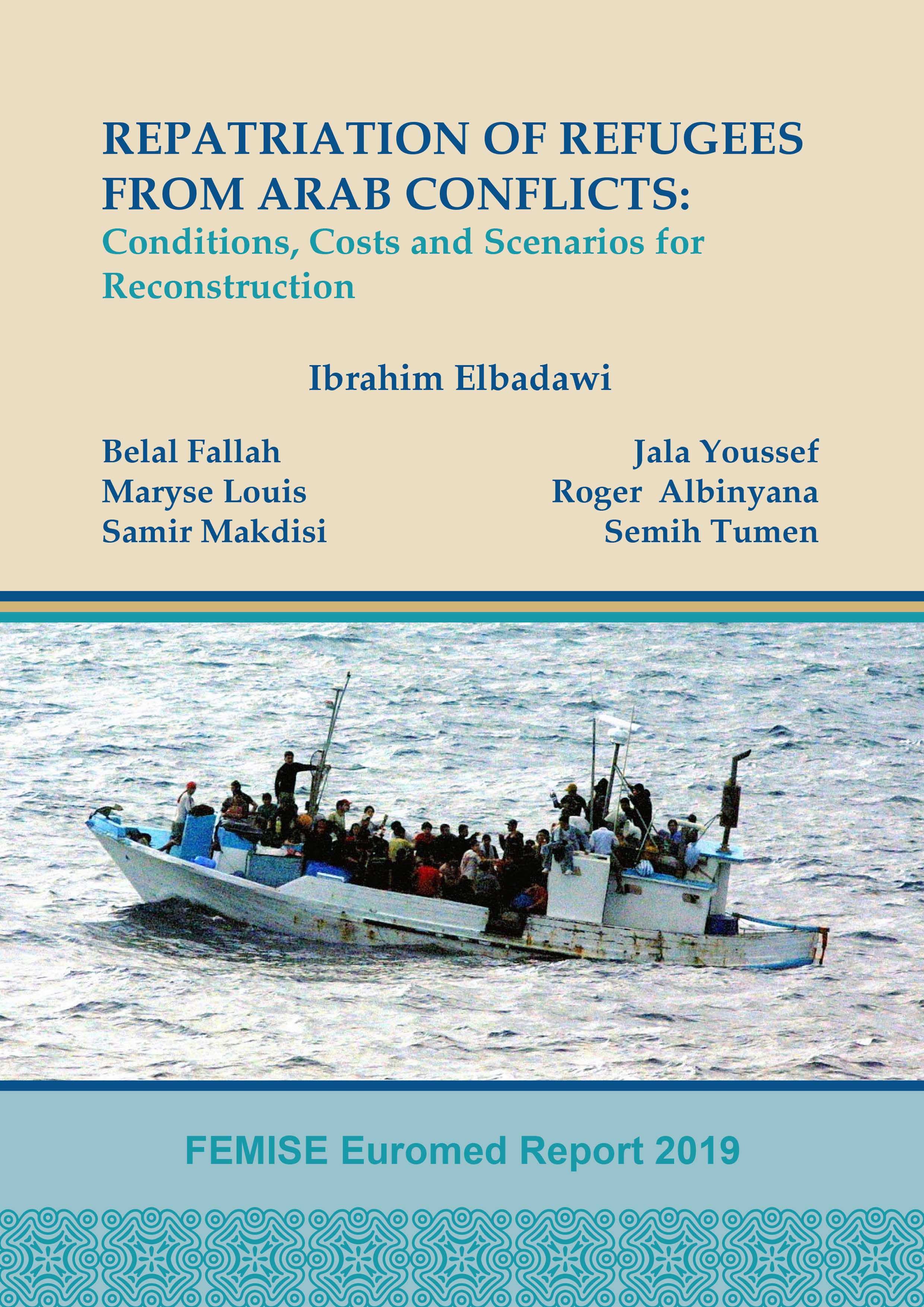
This is what this year’s FEMISE-ERF Euromed Report on « REPATRIATION OF REFUGEES FROM ARAB CONFLICTS: Conditions, Costs and Scenarios for Reconstruction”* is addressing in its four chapters. The authors look into the characteristics of the refugees and the conditions affecting their decisions to return. This overview is followed by an analysis of the possible political settlement scenarios and reconstructions’ potentials, with a focus on the possible role of the international community. The authors then analyse the economic costs of conflicts as well as post-conflict growth scenarios. The report concludes by highlighting the main findings and providing policy insights into how to address this issue to ensure a safe, sustainable and dignified return of refugees to their home countries.
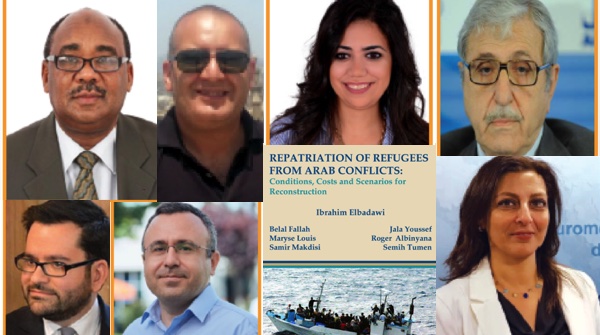
Contributors to the report : Ibrahim Elbadawi, Belal Fallah, Jala Youssef, Maryse Louis, Roger Albinyana, Samir Makdisi, Semih Tumen 
* This report received financial support from the European Union through the FEMISE project on “Support to Economic Research, studies and dia­logues of the Euro-Mediterranean Partnership”. Any views expressed in this report are the sole responsibility of the authors.

EuroMed report: Repatriation of Refugees from Arab Conflicts: Conditions, Costs and Scenarios for Reconstruction

The new EuroMed Report is now available

Repatriation of Refugees from Arab Conflicts : Conditions, Costs and Scenarios for Reconstruction*

The report is available for download here.  


This report discusses the issue of repatriation of refugees in impacted countries of the South Med region.

Through its four chapters, the authors start by looking into the characteristics of these refugees and the conditions affecting their decisions to return.

This overview is followed by an analysis of the possible political settlement scenarios and reconstructions’ potentials, with a focus on the possible role of the international community.

The authors then analyse the economic costs of conflicts as well as post-conflict growth scenarios.

The report concludes by highlighting the main findings and providing policy insights into how to address this issue to ensure a safe, sustainable and dignified return of refugees to their home countries.


Contributors 


Dr. Ibrahim Elbadawi, President of FEMISE and Managing Director of ERF

Dr. Samir Makidisi, Institute of Financial Economics, American University of Beirut, Lebanon

Dr. Semih Tumen, Associate Professor of Economics at TED University, Turkey

Dr. Belal Fallah, Director of research at Palestine Economic Policy Research Institute-MAS, Palestine

Dr. Roger Albinyana, Director of Mediterranean Regional Policies and Human Development, IEMED, Spain

Dr. Maryse Louis, General Manager, FEMISE

Ms. Jala Emad Youssef, AUC, Egypt


The Euromed Report is an annual publication of FEMISE that is addressing themes of importance and interest to the EU-Med region. The report brings value-added to the themes it covers through in-depth analysis by economists from the North and the South of the Mediterranean, using a multidisciplinary approach. This brings a common view from the two shores of the Mediterranean and provides policy recommendations that can make a contribution to the South Med countries during their transition.

* This report received financial support from the European Union through the FEMISE project on “Support to Economic Research, studies and dialogues of the Euro-Mediterranean Partnership”. Any views expressed in this seminar are the sole responsibility of the authors and the speakers.

Med Change Makers e05 : Katarzyna SIDLO, Women Empowerment and Collaborative Economy


FEMISE recently launched its series of interviews called « Med Change Makers ».

« Med Change Makers » are text and video-based interviews that allow dynamic researchers of the FEMISE network to illustrate how their research addresses a policy-relevant question and how it contributes to the policy-making process in the Euro-Mediterranean region.


Boosting female labour market participation rates in the MENA region : Can collaborative economy be of help? ”

Interview with Katarzyna Sidlo, Political Analyst at CASE, researcher at FEMISE

FEMISE recently published its Policy Brief “Boosting female labour market participation rates in the MENA region : Can collaborative economy be of help?”.

Autthor of the MED BRIEF, Dr. Katarzyna Sidlo is a FEMISE researcher who actively participates in the activities of the network. Her work assesses the potential of the collaborative economy to increase women’s labor force participation in the MENA region (Middle East and North Africa). More specifically, it examines ways in which the collaborative economy can enable women who are interested to join the labor market.

  1. How do you define collaborative economy? Can you give us examples from different sectors of such initiatives?

The collaborative (or sharing) economy refers to business models that create an open marketplace for access to goods and services thanks to the use of modern technology. It covers a variety of sectors, is rapidly emerging throughout the world and provides new opportunities for citizens who are able to get what they need from each other instead of going to large organizations (at least that is the theory). Some of the best-known examples of collaborative economy businesses are car-hailing applications such as Uber or Careem, peer-to-peer accommodation website Airbnb, crowdsourcing platforms Kickstarter or Indiegogo, or online marketplace Etsy. Many of them are already household names.

  1. Do you think that collaborative economy is a feasible solution in MENA countries given internet access obstacles and public perceptions?

Well, firstly according to the World Bank, 59% of individuals in the MENA region are internet users. Access to internet as such is therefore not a problem everywhere in the region, although of course in many places broadband is expensive, slow and generally unreliable and in many other, especially urban areas, simply not yet readily available. More importantly, however, I would look at the problem stated in the question in a different way: the potential to make use of what collaborative economy has to offer can be one more argument in favour of extending efforts to provide access to internet to as many people as possible. If internet is not available in a village in the south of Egypt, chances are that neither are many job offers. By providing inhabitants of such a village with access to internet, you give them an opportunity to enter the labour market as well. For instance, they could study for free on one of the many Massive Open Online Courses (MOOCs) platforms available – increasingly also in Arabic – and gain skills that will allow them to find employment. Or they could give Arabic classes online (one platform, NaTakallam, offers such classes taught by refugees). All without having to emigrate and leave their villages or, indeed, houses.

I strongly believe that even if just a small percentage of people in a given society use this chance, it will be worth it. So while the sharing economy will by no means solve all or even most of the problems related to the low female (and male) labour force participation – it would not even if virtually every single person in the region had access to a fast, affordable, and reliable internet – it has a huge potential to contribute to the alleviation of this problem.

  1. What are the main obstacles for female labour force participation in the MENA region and how does collaborative economy bring innovative solutions to each?

Women in the MENA region wishing to join the labour market face numerous obstacles, from practical ones (lack of jobs, difficult commutes) to those of socio-cultural nature (restrictions on outside-of-the-house activities, caring responsibilities) nature. Sharing economy can help to overcome a number of those. Most importantly, it allows women to perform work – and indeed create their own businesses – from the comfort of their own homes. Thanks to this even those women, who due to various family- or culture-related reasons would not undertake paid work outside of the house, can earn their own income (and economic empowerment is a great step towards social and political empowerment). Another good example are ride-hailing services, providing a safer, more reliable and cheaper (compared to traditional taxis) alternative to faulty or point-blank non-existent public transport, oftentimes believed to be not appropriate for use by non-accompanied women. An extreme case in point was Saudi Arabia, where prior to lifting the ban on women driving 80% of Uber’s and 70% of Careem’s clients were female.

  1. One of the article’s recommendations was to improve the legal frameworks in each MENA country to enable the optimal functioning of sharing-economy businesses. What concrete measures can be successfully implemented in the region as a whole and in case-specific contexts?

One of the main advantages of the sharing economy is its flexibility. However, this flexibility can also oftentimes mean lack of clarity for instance in terms of liability, taxation, consumer protection, licensing or insurance. Think about ride hailing services such as Uber, Careem or Lyft: in case of an accident, whose insurance should cover the damages? As drivers are using their private vehicles they may not possess commercial, but rather personal insurance, which can lead to insurers denying the claim. Should the company owning the platform through which drivers are matched with clients be liable at all? Are the drivers even their employees or clients making use of the platforms features? The answer to that question determines answers to many subsequent ones related to social protection (maternity leaves, pensions, health insurance etc.) of the collaborative service providers. Another issue is of course taxation.

Unfortunately, there are no easy answers. The European Union is for instance pondering issuing EU level guidelines but currently whether and to what extent the sharing economy should be regulated is still a matter of a lively debate. The big question is of course how to regulate so that you don’t overregulate and therefore kill the flexibility that makes participating in sharing economy so convenient.

In the MENA region, countries should think about solutions that work best under their specific circumstances. For instance, a voluntary health insurance scheme could be introduced to help those earning their income within the sharing economy to gain social protection (an interesting study on this topic for Tunisia by Khaled Makhloufi, Mohammad Abu-Zaineh, and Bruno Ventelou has been published recently by FEMISE). In Jordan, where the government is working on a tax reform, the question of imposing corporate law tax on collaborative platforms could be investigated.

  1. What is the role you see for the civil society and NGOs in the proliferation of collaborative economy? Would cooperation and synergies between different actors/ stakeholders possible in your opinion?

Collaborative economy has it for-profit and non-profit dimension. Speaking of increasing female labour market participation in the MENA region and the role of CSOs and NGOs, we should probably focus on the latter. The spectrum of possibilities is really broad. Both types of organizations could for instance facilitate women organizing their own car pooling schemes, helping each other to safely and conveniently get to and from work on daily basis. They could set up collaborative working spaces, where female entrepreneurs could set up and run their businesses in a friendly, safe and inspiring environment. They could create online courses in local dialects of Arabic, providing free training to women thinking about starting their own business or work on translations into Arabic of courses which are already available on various MOOC platforms and which provide knowledge and skills that make finding a job easier. All that – and much more – can of course be done in collaboration between different stakeholders. After all that is what collaborative economy is all about.

The MED BRIEF is available for download by clicking here.

Interview by Constantin Tsakas

This activity received financial support from the European Union through the FEMISE project on “Support to Economic Research, studies and dialogues of the Euro-Mediterranean Partnership”. Any views expressed are the sole responsibility of the speakers.
The private sector, its role as an engine of growth and job creation, at the heart of FEMISE research

FEMISE Brochure

Mediterranean countries suffer from a lack of dynamism of their private sector, which is not sufficiently competitive nor job-creating.

Therefore, FEMISE has placed the theme of the private sector, and in particular its role as an engine of growth, job creation and inclusivity, at the center of its research activities. A special attention is paid to the causes that prevent the sector from reaching its potential, in particular the constraints faced by firms in the Southern Mediterranean Region, and to the importance of innovation in the development of the Mediterranean private sector.

One of the specificities of the FEMISE network, coordinated by the Economic Research Forum (ERF) and Institut de la Méditerranée (IM), is to always strive to integrate the points of view of politicians, of private operators and, more broadly, of all local actors, in the discussions carried out under this theme. This approach provides better feedback on the research, and ensures its policy relevance.

The private sector at the center of the FEMISE academic research

Patricia AUGIER (Scientific Pres. of Institut de la Méditerranée, Coordinator and Scientific Pres. of FEMISE), coordinates the 2018 EuroMed report

Firstly, the 2018 FEMISE EuroMed report, the flagship publication of the network, will focus on the private sector in the Mediterranean countries. The objective of the report will be to take stock of the economic dynamics of the Mediterranean countries over the last 20 years (ie since the Barcelona Process), and to understand the blocking points. The general idea is that growth in Mediterranean countries must accelerate to absorb a growing number of incoming individuals in the labor market, and that this growth must be based on productivity gains rather than on factors accumulation : the development of the private sector is therefore at the heart of the definition of a new development model. One of the chapters will focus more specifically on the role of central banks in private sector development. Finally, the major concern of a more inclusive growth will lead us to consider social entrepreneurship as a potential opportunity for the Mediterranean countries.

A “Science for Business” partnership dynamic with technical and operational support actors

Secondly, FEMISE participates, in partnership with ANIMA, in THE NEXT SOCIETY project, which brings together public and private actors from 7 Mediterranean countries with the aim of supporting innovation ecosystems. This collaboration gives the opportunity to FEMISE and ANIMA to pool their complementary skills, which are analysis and production of academic knowledge on the one hand, and technical and operational support on the other hand.

FEMISE’s contribution is firstly to draw-up a scoreboard and analyze the position of each country in terms of innovation and competitiveness indicators, such as the Global Innovation Index, at different stages of innovation (inputs, process and outputs). FEMISE also carries out an analysis of the national innovation strategies and of the ecosystem of involved actors (government, associations, private operators…).

Next, FEMISE identifies high-performing sectors and products to highlight new national comparative advantages and investment opportunities.

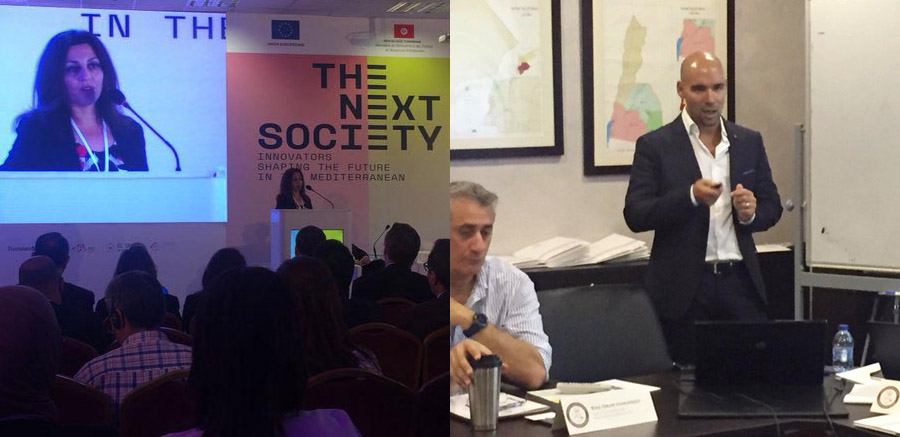
Dr. Maryse LOUIS (General Manager FEMISE, Programs Manager ERF) and Dr. Constantin TSAKAS (General Manager Institut de la Méditerranée, General Secretary FEMISE) presenting FEMISE research at THE NEXT SOCIETY panels in Tunisia and Jordan.

FEMISE presents its findings on the occasion of advocacy panels bringing together academics, entrepreneurs, investors, managers of incubators and innovation structures and public actors. This allows to benefit from their feedback and, above all, from their point of view regarding the factors that led to the emergence of these new comparative advantages. This approach ensures that the findings and recommendations from FEMISE work can contribute to elaborate public policies. The challenge of these panels is to establish, for each country, a roadmap for innovation, from implementation to evaluation, with the objectives of strengthening national innovation systems, fostering coordination between stakeholders, and improving the instruments of innovation policies and strategies.

An opening towards South-Mediterranean institutions in a “Science for Policy” approach

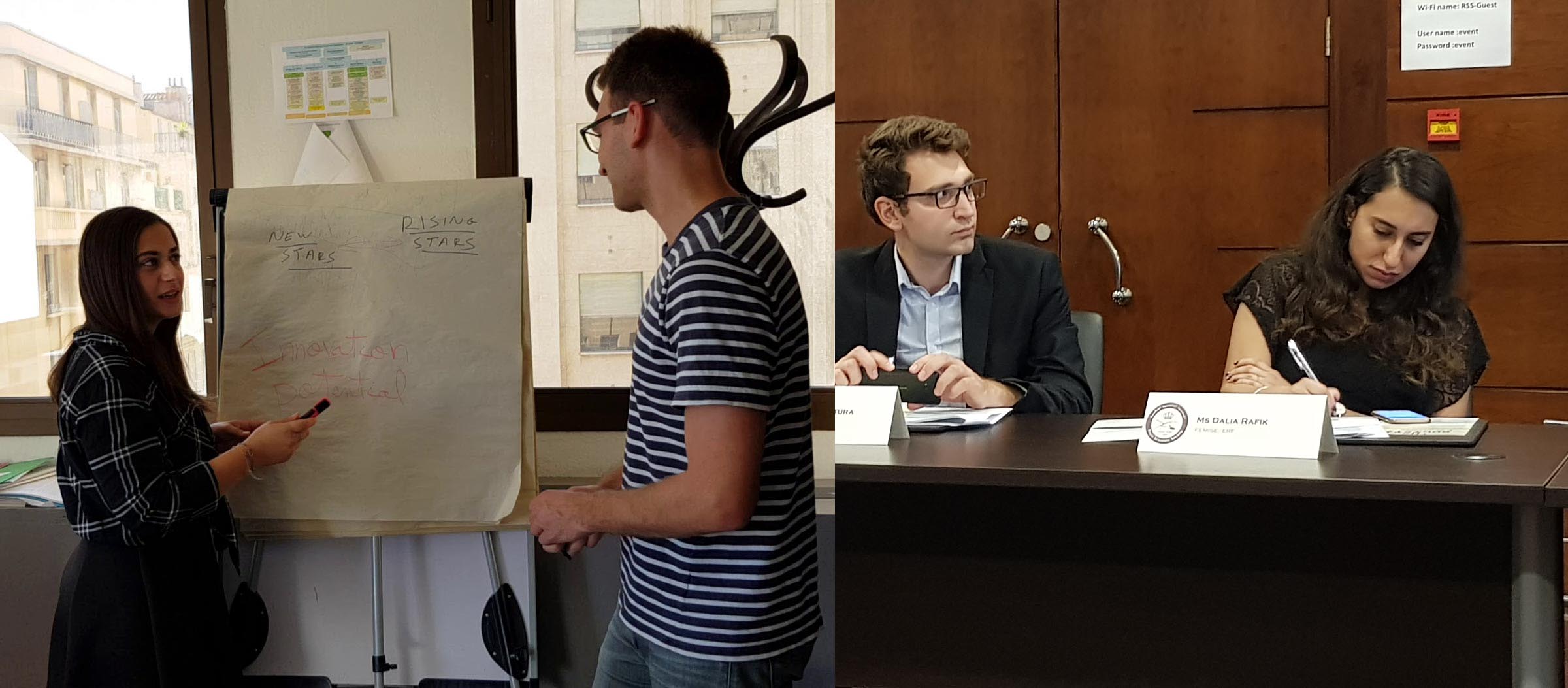
Les jeunes chercheurs du FEMISE participent activement aux recherches, Karine MOUKADDEM et Jocelyn VENTURA (Institut de la Méditerranée, FEMISE) et Dalia RAFIK (ERF, FEMISE)

Thirdly, FEMISE is opening-up by cooperating with South Mediterranean actors and institutions directly concerned by these issues. Therefore, FEMISE co-authored and will publish in 2019 the2019 EuroMed report which will identify the constraints to growth and integration in the global value chains of Moroccan SMEs. This document results from the cooperation of the network with the African Development Bank, a main regional funder for development aid, and with the Institut supérieur de commerce et de gestion d’administration des entreprises (ISCAE) established in Morocco.

It is essential for the Mediterranean countries to better integrate SMEs into the global value chains in which most international trade takes place. In this report, we have chosen to focus on the case of Moroccan firms. It will be based on surveys and field interviews of SME managers and representatives of professional associations as well as on the Enterprise Surveys and Doing Business indicators of the World Bank. It is in this approach of discussions between researchers and public and private operators that the preliminary results of the report were presented before publication, in order to gather comments, suggestions and recommendations to enrich the research.

A triple anchoring to obtain research that is relevant from a political and operational dimension

To conclude, in addition to the ongoing academic research conducted by network members and supported financially by FEMISE funds (research available on the website), 3 other types of work devoted to the private sector are currently mobilizing the FEMISE team: (1) an analysis of the situation and a general discussion covering the entire region (EuroMed2018 Report), (2) a targeted and co-authored thematic analysis with a national focus (EuroMed2019 Report) and (3) a project on innovation in partnership with ANIMA.

Our analysis feeds on both (i) the knowledge and contributions of academic research, (ii) the consideration of concrete situations within the countries, as well as (iii) the points of view and insights from politicians and business actors. This triple anchoring allows us to develop products that are relevant from a political and operational dimension.

To get the FEMISE Brochure, with a presentation of the activities of the network and its new thematic approaches please click here.

To find out more about the preliminary findings of the report co-led with the AfDB, some answers are available in the interview below:

Article written by Jocelyn Ventura (Economist Institut de la Méditerranée)

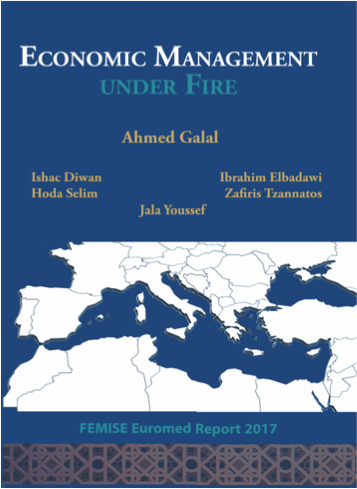
FEMISE Euromed Report 2017: Economic Management Under Fire: How did the South Med Policy-Makers Respond to the Demands for Change?

Economic Management Under Fire:

How did the South Med Policy-Makers Respond to the Demands for Change?[1]

The report is now available for downloading (GB, pdf, 1.6 MB, 135 p.)

FEMISE is launching its 2017 Euro-Mediterranean report on the transition of the South Mediterranean economies. The report provides a critical analysis of the responses of selected countries of the region to the economic, social and political challenges in the wake of the uprising and recommendations on how to move forward to ensure a successful transition.
“Overall, South-Med countries are at a crossroad. They hold an enormous potential that has been held back by modest economic performance and extractive political institutions. The uprising, which began in December 2011 provided these countries an opportunity to follow a new development path”, state the authors of the report.

The political transition has unavoidably taken a toll on these economies and the governments found themselves facing a number of challenges and difficult decisions to make. For example, on the economic front and in and in an attempt to respond to popular demands and to calm rising social unrests, governments responded by adopting expansionary policies rather than austerity measures. While this policy choice added pressure on existing budget deficits and increased public debts, it is believed that it will help reverse the economic downturn over time.

Seven years on, the development model does not seem to have changed much. To embark on a new course, the new strategy should aim at achieving the dual overarching objectives of consolidating the post-transition democratic pol­ity, on the one hand, while mak­ing the transition towards a dy­namic and equitable economy, on the other”, recommended the authors – who also provide targeted policy recommendations on how to achieve this objective in the report.

In 5 chapters and through a critical assessment of the performances of five South-Med countries in transition (Algeria, Egypt, Jordan, Morocco and Tunisia), this report attempts to answer the following questions:

  • What were the immediate economic consequences of the political transition in South-Med countries?
  • How well did policymakers respond to the economic and social adversities associated with the political transition?
  • Based on the analysis and the likely political evolution in these countries, what can be done to bring about healthier macroeconomic balances, job creating growth and greater social inclusion?

 The report is written by a group of international experts and senior macroeconomists, political economists and social economists under the management of the Economic Research Forum (ERF, Cairo). Dr. Ahmed Galal, the editor of the report is the Chairman of the Board of the MENA Health Policy Forum and former ERF Managing Director and former FEMISE President; Dr. Ishac Diwan is  visiting professor at Columbia University and holds a chair at Paris Sciences et Lettres; Dr. Ibrahim Elbadawi is the President of FEMISE and Managing Director of ERF; Dr. Hoda Selim is an Economist at the IMF; Dr. Zafiris Tzannatos is the Former professor in and chair of the Economics Department at the American University of Beirut; and Ms Jala Youssef is an economist of ERF and FEMISE.

 The Euromed Report is an annual publication of FEMISE that is addressing themes of importance and interest to the EU-Med region. The report brings value-added to the themes it covers through in-depth analysis by economists from the North and the South of the Mediterranean, using a multidisciplinary approach. This brings a common view from the two shores of the Mediterranean and provides policy recommendations that can make a contribution to the South Med countries during their transition.

This report received financial support from the European Union through the FEMISE project on “Support to Economic Research, studies and dialogues of the Euro-Mediterranean Partnership”. Any views expressed in this report are the sole responsibility of the authors.

Please contact FEMISE for more information: contact@femise.org

Follow us on Twitter at : https://twitter.com/femisenetwork

[1] This report and its launch event received financial support from the European Union through the FEMISE project on “Support to Economic Research, studies and dialogues of the Euro-Mediterranean Partnership”. Any views expressed in this seminar are the sole responsibility of the authors and the speakers.

THE NEXT SOCIETY : FEMISE participates in action plan to support innovation in the Mediterranean

A successful launch, in Greece, for THE NEXT SOCIETY, a movement gathering entrepreneurs, investors, corporates, public and private innovation stakeholders in Europe and the Mediterranean.
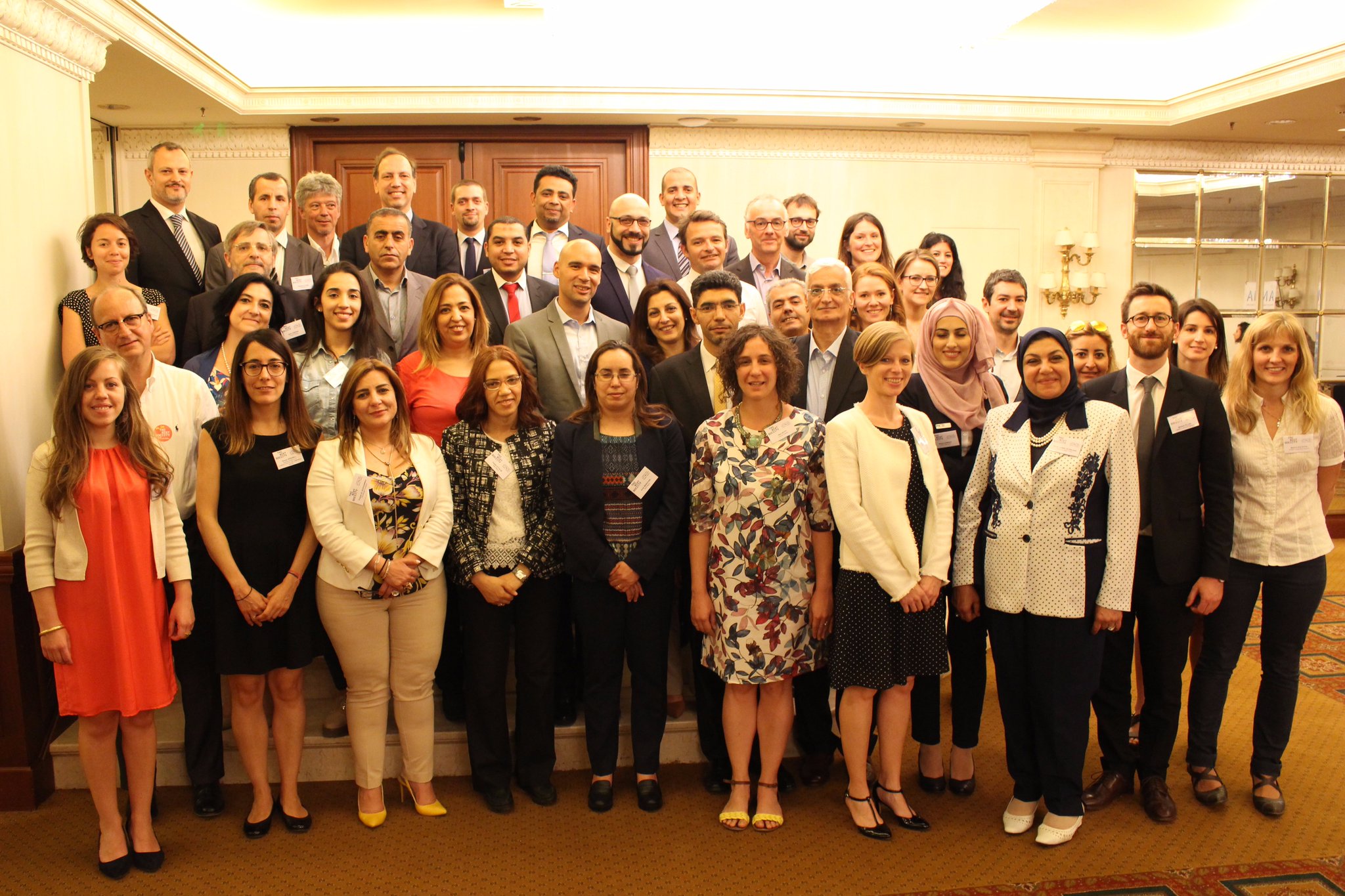
This community took the opportunity to unveil its action plan implemented over 4 years, with the support of the European Commission. Its activities aim to accompany change in the region by placing the private sector at the core of the dialogue as well as the innovation and competitiveness  measures. THE NEXT SOCIETY echoes an inclusive philosophy based on corporate social responsibility and supports the emergence of talents and new leaders by targeting start-ups, clusters and technology transfer offices.

On the occasion of the event, co-organised by ANIMA Investment Network and Enterprise Greece on May 16th in Athens, almost a hundred Euro-Mediterranean professionals and experts exchanged views on the activities implemented by the initiative, in the presence of Greek Ministers Mr. Dimitris Papadimitriou, Minister of Economy and Development and Mr. Costas Fotakis, Alternate Minister for Research and Innovation.
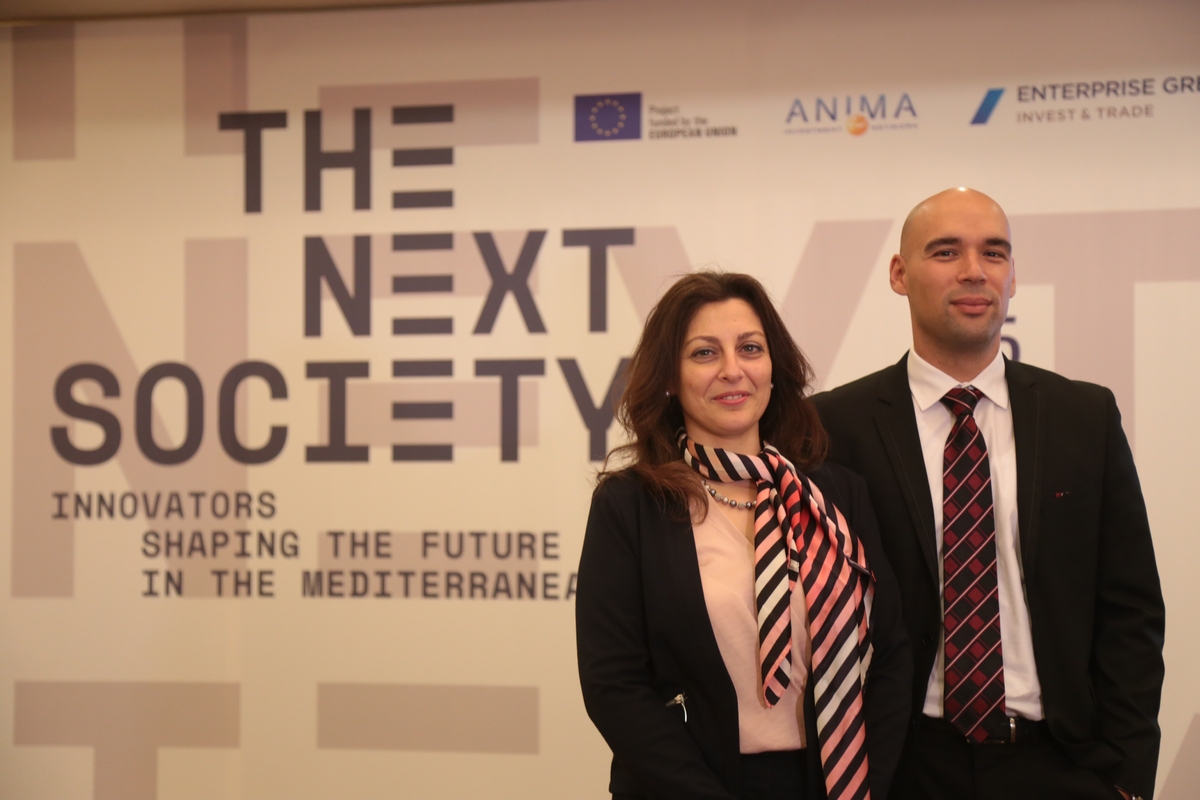
According to Candace Johnson, president of EBAN (The European Trade Association for Early Stage Investors) “… the entrepreneurs of Maghreb, Middle-East and Africa are the solutions to the world’s problem”. Vladimir Rojanski, from the DG NEAR at the European Commission, underlined the importance of job creation and the development of SMEs and start-ups, as well as the European Union’s strong desire to support innovation through new financing mechanisms in the region.

THE NEXT SOCIETY activates change at every level

On May 16th in Athens, THE NEXT SOCIETY presented a comprehensive action plan supported by the European Commission, which impacts several  levels of the innovation ecosystem:

  • Improve policy frameworks: THE NEXT SOCIETY establishes a public-private dialogue and benchmarks the performance of Mediterranean innovation ecosystems in order to define and implement country strategic roadmaps and improve innovation support strategies.
  • Foster start-up success: THE NEXT SOCIETY offers tailor-made support to Mediterranean start-ups to help them go international and raise funds thanks to workshops and training sessions, immersion into foreign markets and incubation in European innovation hubs, meetings with investors and long-term coaching by committed mentors.
  • Promote and internationalise clusters: THE NEXT SOCIETY develops peer-learning services for business and industrial clusters as well as foreign partnership and guide them towards a Cluster Excellence management approach.
  • Support technology transfer offices (TTO): THE NEXT SOCIETY trains TTO managers like entrepreneurs and help them improve their services, market their innovation portfolio  and meet potential clients.

FEMISE contributing to THE NEXT SOCIETY

As presented by Dr Maryse Louis (General Manager FEMISE, Programs Manager Economic Research Forum) during the launch event in Athens, FEMISE and its affiliates Institut de la Méditerranée and Economic Research Forum will essentially contribute in the two Activities described below.

Dr Maryse Louis (General Manager FEMISE, Programs Manager Economic Research Forum) and Dr Constantin Tsakas (General Secretary FEMISE, General Manager Institut de la Méditerranée)

National Innovation and Competitiveness Monitor (NICM) : Here  in-depth analysis and assessment of existing definitions, scoreboards, benchmarks and relevant studies will take place. This will allow defining new concepts, creating a south-Med scoreboard and a national scoreboard for each country as well as preparing country specific studies on innovation and drafting policy briefs. The way the outputs of this activity will be communicated is an essential part of its success. This will be made through meetings organised throughout the projects, several workshops and conferences and through the country studies and the policy Briefs that will be prepared for each country.

Value Chain Analysis : The objective here will be to encourage enterprises (national / international) to identify and use the technological / innovative capacities of the MED countries.A General overview of sectoral development will be provided to show how the level of high tech exports change dover time by sector in each of the 7 countries. Then, FEMISE will focus on looking which products have performed best in exports, raising the question of where the new comparative advantages for each of the seven countries lie. Lastly, analysing the conditions of success stories at the firm leve will shed light on how have firms succeeded in bringing these new comparative advantages to the fore.

JOIN OR FOLLOW THE NEXT SOCIETY

Mail : welcome@thenextsociety.co

Twitter @TheNext_Society

Facebook THE NEXT SOCIETY

www.thenextsociety.co (coming soon)